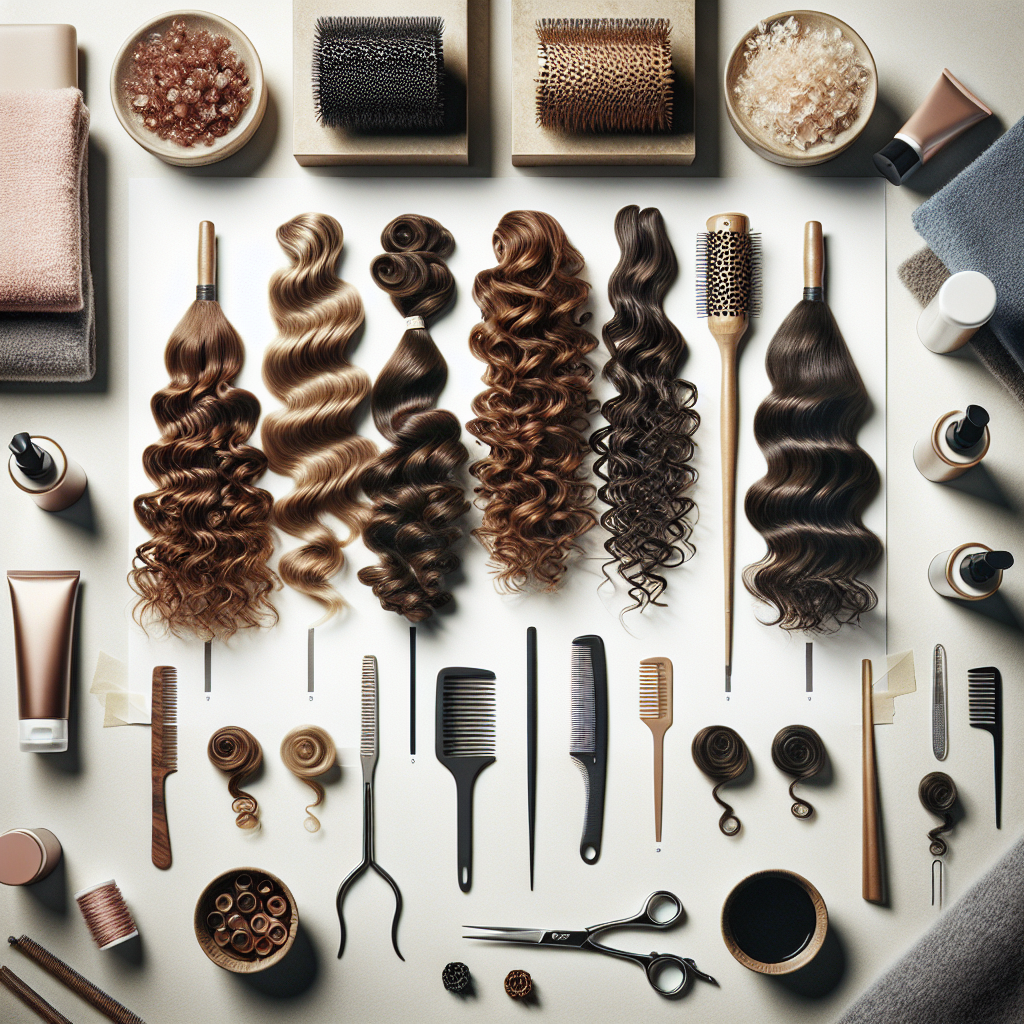
Understanding the types of curly hair chart is an essential step in embracing your unique hair texture. This chart categorizes curly hair into various types, helping you determine the best care and styling methods for your specific curl pattern. Whether you have loose wavy curls or tight coils, knowing your curl type can enhance your hair care routine and boost your confidence.
Types of Curly Hair Chart
The types of curly hair chart generally divides curly hair into four main categories: wavy (Type 2), curly (Type 3), and coily (Type 4). Each type features distinct characteristics, requiring personalized care techniques to maintain health and definition. Let’s delve into these types more specifically:
Type 2: Wavy Hair
Wavy hair ranges from loose, beach-like waves to tighter S-shaped waves. Type 2 hair is often prone to frizz but usually lacks the volume seen in curlier types. Understanding this type helps you find the right products to enhance your natural wave pattern.
- 2A: Fine, slight waves with minimal frizz.
- 2B: More defined waves resembling the letter ‘S’.
- 2C: Thick and coarse waves with frizz and a more distinct wave pattern.
Type 3: Curly Hair
Type 3 curls are characterized by their well-defined loops, which can range from loose curls to tight spirals. This hair type typically has more volume and body, requiring more moisture to combat frizz and maintain curl definition.
- 3A: Large, loose curls that resemble ringlets.
- 3B: Medium curls that slightly resemble corkscrews.
- 3C: Tight curls with a corkscrew shape, offering more volume.
Type 4: Coily Hair
Coily hair includes tightly curled hair patterns, which appear dense and voluminous. This hair type often struggles with moisture retention and requires care practices focused on hydration and gentle styling.
- 4A: Soft and very tight curls with a defined S-pattern.
- 4B: Z-pattern curls that are prone to dryness.
- 4C: Very tight curls without a distinct curly pattern, often with shrinkage.
Maintaining Different Curl Types
Caring for your curls involves moisturizing, handling your hair gently, and using styling products that enhance your natural curl pattern. Here are some general tips based on the types of curls:
For Type 2 Hair
Use lightweight products that define and hold the wave pattern without weighing it down. A sea salt spray might help retain beachy waves, while a light mousse can add volume and texture.
For Type 3 Hair
Focus on keeping the curls moisturized to prevent frizz. A leave-in conditioner or cream can help maintain the curl’s health while offering definition. Avoid using harsh chemicals that can damage the curl structure.
For Type 4 Hair
Maintaining moisture is vital for this curl type. Use rich, cream-based leave-in conditioners and oils to lock in hydration. Protective styles like braids or twists can reduce styling stress and promote hair health.
It’s important to note that environmental factors, lifestyle, and even certain products can affect your hair’s appearance and health. For more tips, you may explore our guide on how lifestyle impacts hair health.
For further information on hair types and care tips, you can visit this comprehensive page about health and general well-being.
Embracing Your Natural Curls
Understanding the types of curly hair chart is just the beginning of embracing your natural hair texture. By identifying your curl type, you can tailor your hair care routine to enhance the health and beauty of your unique curls. Embrace what makes your hair special and opt for products and practices that celebrate your natural look.
- Curly hair is categorized into types 2, 3, and 4, each with subtypes.
- Understanding your curl type helps in choosing the right hair care products.
- Proper hydration and gentle handling are crucial for all curl patterns.
- Environmental factors and lifestyle choices can affect hair health.
- Feel confident in your natural hair by embracing its unique beauty.
FAQ
What is the purpose of a curly hair chart?
A curly hair chart helps individuals identify their specific curl pattern, which aids in selecting appropriate hair care products and styling methods for their particular hair type.
How can I determine my curl type?
To determine your curl type, observe your hair in its natural state after air-drying. Compare its appearance to the descriptions in the curly hair chart categories.
Can I have more than one curl type in my hair?
Yes, it is common for individuals to have a combination of different curl patterns within their hair, and it’s important to care for each type differently as needed.
What common mistakes should I avoid with curly hair?
Avoid over-washing, using harsh chemicals, and brushing dry curls aggressively. Such practices can damage curls, lead to frizz, and disrupt the curl pattern.
How often should I wash curly hair?
Washing curly hair 1-2 times a week is typically sufficient unless your hair or scalp becomes oily or dirty more quickly. Frequent washing can strip natural oils and lead to dryness.